


Thinking about building a slab house in a cold climate? Wondering if a basement foundation would be better—or how to protect a slab from frost? This guide explains:
- How slabs perform in colder temperatures
- Why insulation matters
- The difference between heated vs. unheated buildings
- The pros and cons of slab-on-grade homes in cold regions
Slab Houses In Cold Climates
One of the biggest questions for builders is: How will a slab foundation handle the cold?
In northern regions, the frost line (the depth where groundwater in soil freezes) can be as deep as 36–42 inches. Traditionally, contractors dug basements below the frost line to avoid problems, but this method added significant cost.
Today, thanks to decades of research in Europe, Canada, and the U.S., builders can confidently construct slab homes in cold climates using Frost-Protected Shallow Foundations (FPSF).
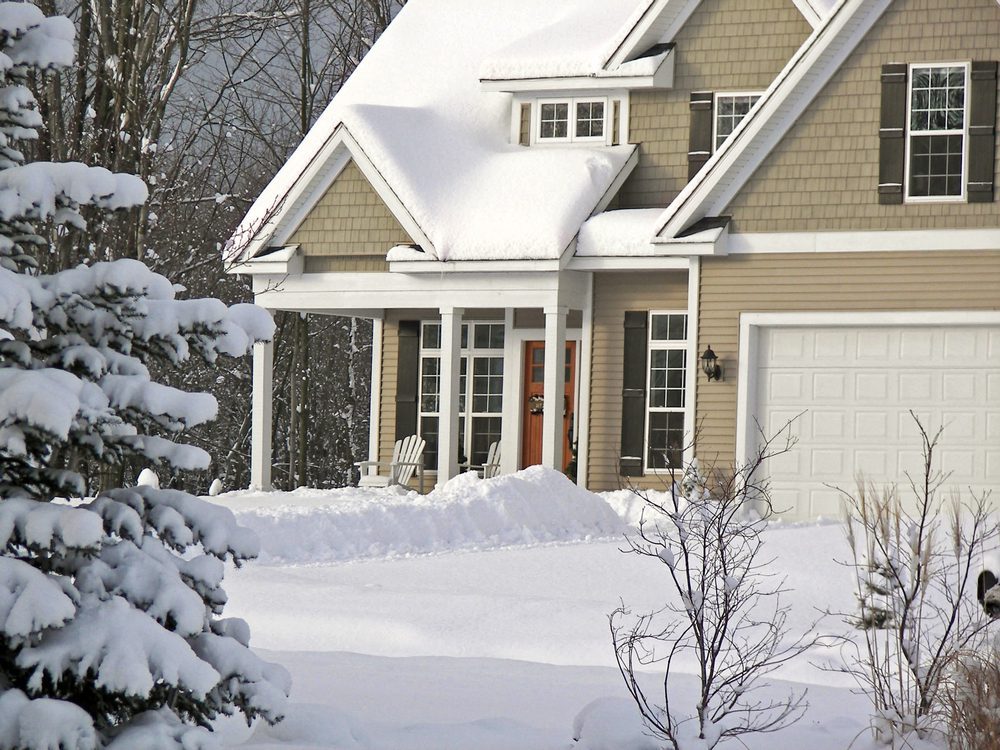
Slab House vs. Basements In Cold Climates
Basements used to be the default choice for cold climates—but they come with drawbacks:
- Require multiple concrete pours (footings, walls, floor).
- Need extra excavation and proper backfilling to avoid structural issues.
- Tend to be colder and more expensive to heat.
- Carry a higher risk of water damage or flooding.
Slab-on-grade homes, on the other hand:
- Require less excavation.
- Lower flood risk.
- Often cost less to build and insure.

Frost-Protected Shallow Foundations (FPSF)
FPSF technology allows builders to raise the frost depth from 40 inches to about 12 inches, reducing excavation and construction costs.
How it works:
- Rigid foam insulation is installed around the perimeter of the foundation wall.
- This insulation captures geothermal heat and conditioned indoor heat, preventing frost from penetrating beneath the slab.
- A typical FPSF requires just 1–2.5 inches of extruded polystyrene insulation on the footing and foundation wall.
Savings: FPSF can reduce construction costs by $1,500–$4,000 compared to traditional deep foundations.

Heated Buildings In Cold Climates
For heated homes, FPSF is especially effective. Instead of digging footings 42 inches or deeper, builders can often install them at 16 inches or less.
Benefits:
- Prevents frost heave under footings.
- Reduces heat loss from the home.
- Cuts down on heating bills over time.
FPSF isn’t limited to slab-on-grade—it can also be used with stem wall foundations, unventilated crawl spaces, remodeling projects, and even walkout basements.
The Air-Freezing Index
An important factor in design is the Air-Freezing Index (AFI), which measures how long and how severely temperatures stay below freezing each winter.
- Milder regions (like southern Florida) require minimal insulation.
- Cold regions (like northern Minnesota) need more vertical and horizontal insulation for proper frost protection.
Unheated Buildings in Cold Climates
FPSF also benefits unheated structures—such as garages, sheds, or porches.
For these buildings, the entire slab must be insulated, and in colder zones, insulation often extends beyond the perimeter of the building.
This is especially valuable in areas with rocky soil, where excavation is difficult, or when minimizing site disturbance is a priority.

Cons Of Slab Houses In Cold Climates
While slab-on-grade homes have advantages, there are trade-offs:
- No basement storage – Mechanical systems (breaker panel, laundry, water heater, HVAC) must be placed inside the home, garage, or shed.
- Less living space – Losing a basement means less usable square footage.
- Placement challenges – Some homeowners dislike having utilities inside the main living area.
Read more about – Post tension slab problems & advantages.

Who to Call for Slab House Inspections & Repairs
If you own a slab home in a cold climate—or are planning to build one—it’s important to ensure your foundation is properly designed and insulated.
At Foundation Professionals of Florida, we specialize in slab, crawl space, and foundation repair solutions. Whether you’re dealing with frost heave, cracks, or settlement, our award-winning team is here to help.
Contact us today to schedule a foundation inspection or repair consultation.
